


Our cabin, The Bay, was doing just fine.
It was booked. It was loved. It didn’t need a renovation.
Our advisors told us investing in updates didn’t make sense on paper. And they weren’t wrong.
From the outside, everything looked like success. The calendar was full. Guests were happy. In the world of short-term rentals, that’s usually the goal.

But I couldn’t shake the feeling that we weren’t finished.
The cabin was beautiful. It was welcoming. But it wasn’t fully ours yet. Our whole heart wasn’t in it. And if I’m honest, we had more of the story to tell.
Last summer, that realization became impossible to ignore.
The Cabin That Changed Everything

Our family rented a cabin off the coast of Maine for our summer vacation.
It wasn’t luxury. It wasn’t styled within an inch of its life. Nothing matched. The mugs were a collection of years, not a set ordered all at once. Books were stacked in corners that had clearly been read more than once. Vinyl records tucked into cabinets. Furniture that had lived. Photos on the walls of the family who loved it.
It felt less like a rental and more like someone’s grandfather still owned it.
There was a weight to it. A presence. A sense that we were stepping into something that had already been loved long before we arrived.
One evening as I sat watching the sunset, I realized something I couldn’t ignore.
This place had a pulse.
And somewhere between the sound of the ocean and the quiet clutter of that living room, I had a moment that felt both uncomfortable and clarifying at the same time:
We have a story like this.
Six generations worth, actually.
A Legacy That Started Long Before Us
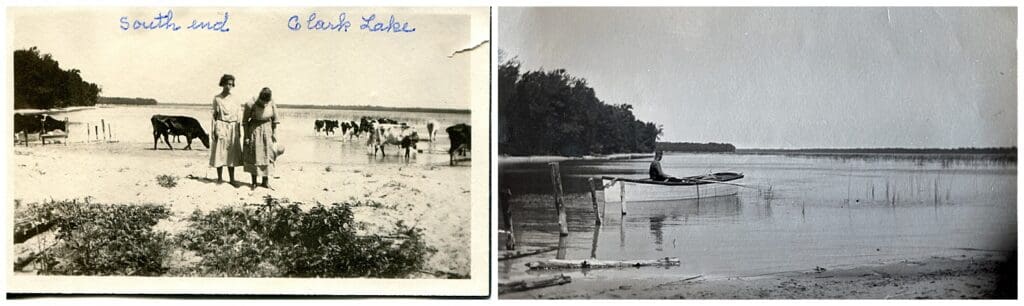 My great-grandfather Hugo first came to Clark Lake in the early 1900s.
He traveled by horse and buggy to what was then an unknown lake surrounded by farmland and forest. Eventually he built a modest cottage on the shore.
That cottage, now known in our family as the Blue Cottage, became the backdrop for the childhood memories that shaped all of us.
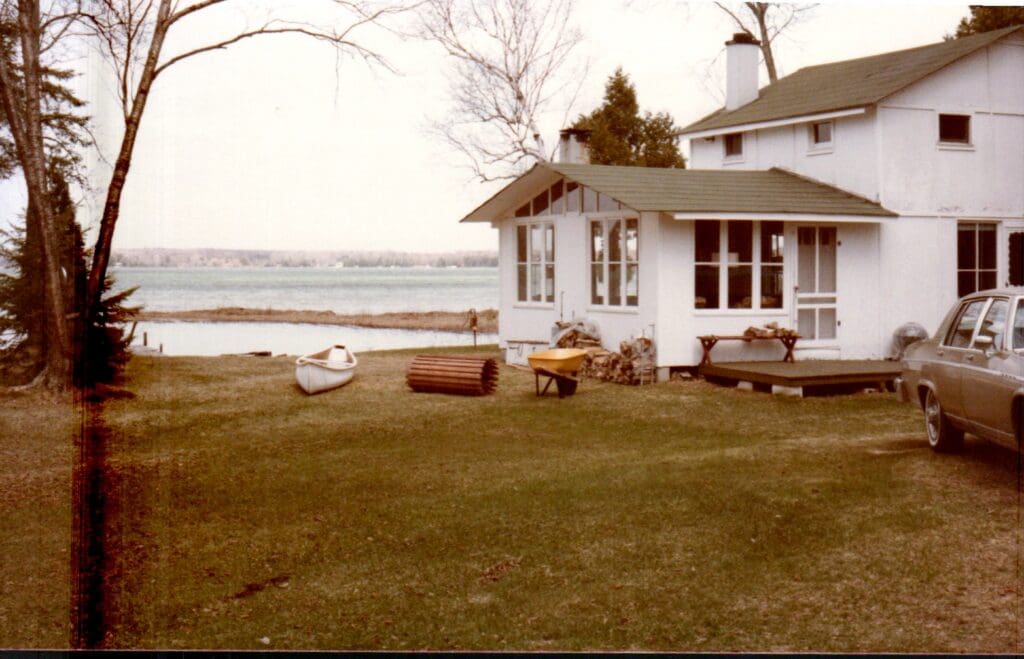
Curtains instead of doors.
Rain on a metal roof.
Too many cousins squeezed into bunk beds.
Bare feet on wood floors.
Waterskiing from sunrise to sunset.
Storms rolling in over the lake. Bonfires at night. Mornings with coffee on the dock.
A place that shaped us long before we realized it was shaping us.
We had the legacy.
But I wasn’t letting it lead.
I hadn’t even fully told that story.
The Problem With Building Bigger
Somewhere along the way, I realized something important:
It’s easy to preserve something physically.
It’s much harder to preserve what made it matter.
In Door County, new construction is everywhere. Bigger. Brighter. Designed to impress. And there is nothing inherently wrong with that.
But when everything becomes optimized for scale and style, something quieter gets lost.
Fingerprints. Imperfection. Story.
There’s a difference between a space that was installed and a space that was lived into.
And if we weren’t careful, The Bay risked becoming beautiful… but forgettable.
Not because it lacked charm, but because it wasn’t fully anchored in where it came from.
In a world building bigger and newer, we chose something different.
Smaller. And storied.
Not everything old should be replaced. Some things should be protected.
That’s what this renovation became.
Not an upgrade.
A decision.
The Offer That Changed Everything
 Last fall we were offered three times what we paid for this cabin.
Three times.
The couple who approached us planned to tear it down and build something new.
For a moment it felt validating.
Like we had made a smart investment.
And then it made me sick to my stomach.
Because I could see it.
The demolition.
The bones gone.
The proportions changed.
The quiet weight of something that had already lived a full life before we arrived, erased.
That was the moment this stopped being about investment.
And became about stewardship.
You can build bigger.
You can build newer.
But you can’t build legacy from scratch.
So we said no.
What Protecting a Cabin Actually Looks Like
Protecting something doesn’t mean freezing it in time.
It means choosing what carries the story forward.
So we began renovating. We hired an amazing designer, Haye’s & Co., who valued the story behind the design more than anything.

And then the hunt for items that had depth and story began. I called my aunt and asked for two paint-by-number paintings my grandmother completed at the cottage. My dad says he and his sisters may have even helped finish them when they were little. They hang in the kitchen now, not because they’re valuable, but because they remind me where this all began.
I pulled the old waterskis we learned on out of a shed at my uncle’s and mounted them on the wall.
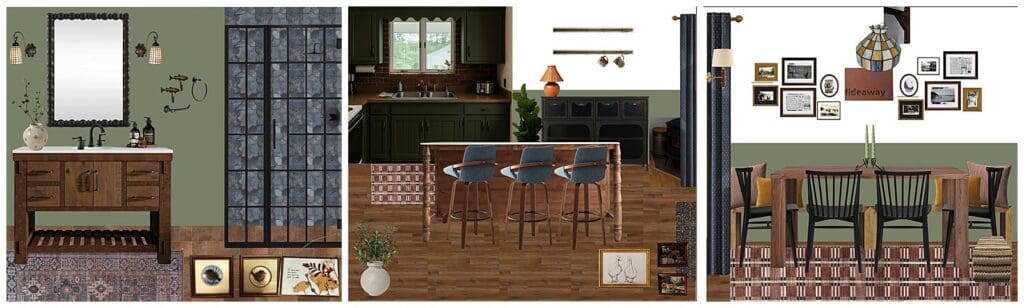
I spent a morning with my great uncle, the last of his generation, listening to his memories and scanning old photos of my great-grandparents so their faces could hang on the walls and quietly tell our origin story.
I’ve been collecting vintage mugs for months. Mismatched, imperfect, found one at a time because I want “Which mug should I have my coffee with this morning?” to be one of the only decisions our guests have to make.
And I want that choice to bring them joy.
We hunted down the same board games we grew up playing: Stratego and Battleship. The ones that used to take over rainy afternoons at the lake.
We thrifted vintage frames to display drawings of our other cabins. Small reminders that this isn’t just a property. It’s a mission. To preserve and share places like this before they disappear.
Old Soul, Quietly Elevated
But I didn’t want the cabin to feel old for the sake of old.
I wanted it to feel collected with intention.
Elevated.
Like someone with good taste curated these things slowly over time.
So we paired history with depth.
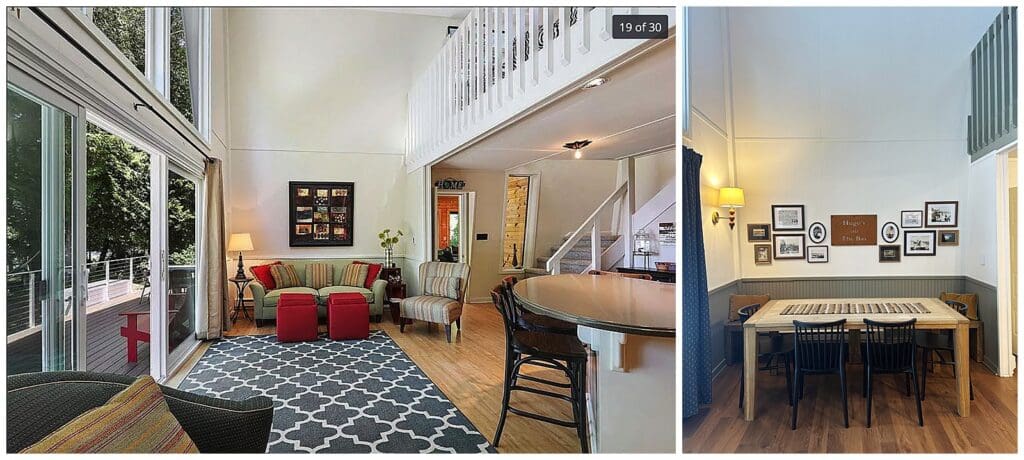
A large Anthropologie island where friends can gather over a glass of wine while dinner is being made after a long day at the lake.
Deep-toned tile in the new master bathroom, because I believe in character in cabins… but I also believe in updated bathrooms.
A giant, sink-in couch designed for the kind of late-night conversations that only happen when you’re unplugged from your normal life.
Custom-made wood beams that highlight the two-story ceilings.
Every detail was considered.
Not to impress.
But to honor what was already there.
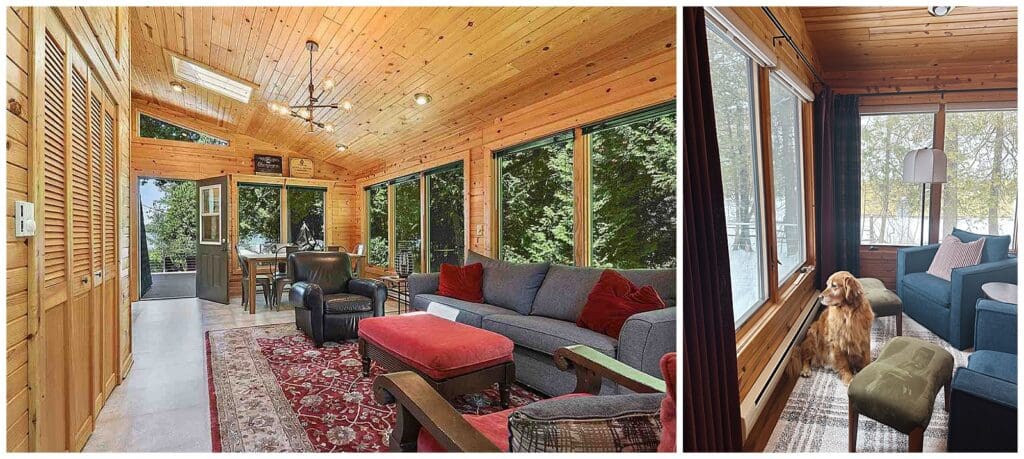
Here are some before photos from when we bought the cabin paired with “after” (sort of, more like during) photos taken as we complete this renovation.



Why We Renamed It
Somewhere in the middle of the renovation we realized the name needed to change too.
“The Bay” was named for its geography. The cabin sits quietly on a bay of Clark Lake.
 But this renovation had become about more than place.
It had become about lineage.
So we merged the two.
Hugo’s on The Bay.
His story woven into the next chapter of this cabin.
Why This Matters
We didn’t renovate Hugo’s on The Bay to make it newer.
We renovated it to make it truer.
Truer to the generations who came before us.
Truer to the kind of cabins that shaped us.
Truer to the belief that some things are worth preserving.
These cabins aren’t meant to impress you.
They’re meant to change your rhythm.
To gather people closer.
To remind you that simplicity isn’t a downgrade — it’s a return.
Come Borrow Our Grandfather’s Cabin
We have a grandfather’s cabin to share with the world.
Not because it’s perfect.
But because it’s alive.
If you’ve never known a place like this, a cabin with history in the walls and intention in every detail, I hope you come borrow ours.
You can view availability and book a stay at Hugo’s on The Bay directly here:
And if you’d like to follow along as we continue preserving and telling these stories, we share behind-the-scenes moments regularly on Instagram.
This story is still being written.


